
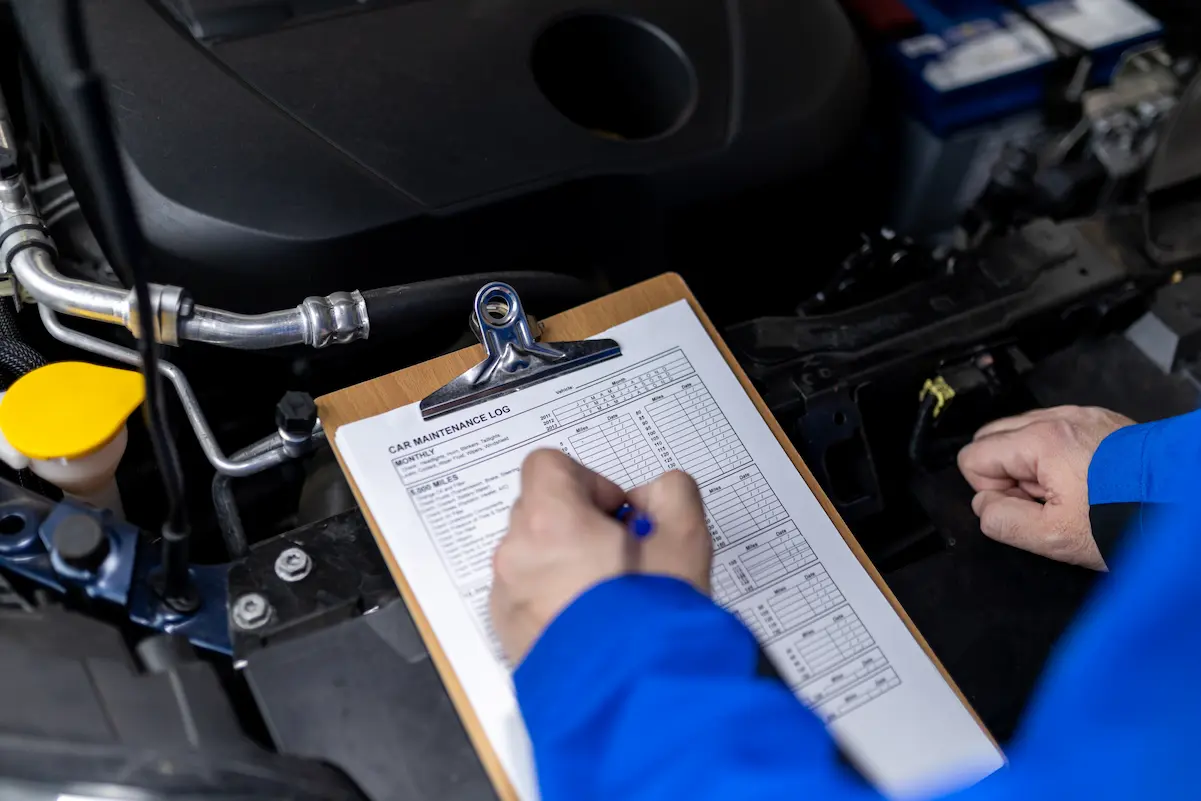
Fleet managers usually think of maintenance records as a compliance tool, something that satisfies FMCSA and keeps a fleet ready for a roadside inspection. Fewer connect those same records to what they're paying for insurance every year. Underwriters increasingly look at maintenance history as a direct signal of risk, and fleets with thin or disorganized records are paying for that gap whether they realize it or not.
Key takeaways:
Commercial auto insurers price risk based on the likelihood and severity of claims. A fleet with documented, consistent preventive maintenance is statistically less likely to have a mechanical failure cause or contribute to an accident, and underwriters have gotten more sophisticated about pulling that data into their pricing models.
A fleet that can produce service records showing brake inspections, tire rotations, and DOT-mandated checks happened on schedule is presenting a lower-risk profile than one that can only show repairs after something already broke.
This shift mirrors what's already happening on the regulatory side. Fleets keep detailed maintenance and inspection documentation to satisfy FMCSA audits, and that same documentation, organized and timestamped, is exactly what an underwriter wants to see during a policy renewal or a post-claim investigation. There's no separate system to build. The records a fleet already maintains for compliance do double duty for insurance purposes if they're accessible and complete.
Not all records carry equal weight. A folder of paper work orders scattered across different vendors and formats doesn't help much, even if the maintenance itself was done correctly.
Records that hold up during underwriting and claims review tend to share the same traits:
When a fleet can produce that history quickly during underwriting or after an incident, it shortens the review process and removes ambiguity that insurers otherwise price in as risk.
This becomes especially relevant after a claim. If a mechanical failure contributes to an accident, the fleet's maintenance records become part of the investigation. Fleets that can show the failed component was inspected and serviced on a normal schedule are in a very different position than fleets that can't produce any history at all. Gaps in the record don't just look bad, they can shift liability and affect how a claim gets settled.
Some fleets have started bringing maintenance summaries directly into insurance renewal conversations instead of waiting for an underwriter to ask. A clean, organized service history, the kind that already gets built through routine preventive maintenance and the digital recordkeeping practices that hold up under stricter FMCSA audits, becomes leverage in that conversation rather than paperwork sitting in a drawer.
Fleets that treat recordkeeping as a byproduct of good maintenance practice, not a separate administrative burden, tend to be the ones with the documentation ready when it matters most.
The practical starting point is making sure every service event, whether it's a full inspection or a routine part replacement, gets logged consistently through a structured fleet maintenance program rather than living with individual technicians or shops. That consistency is what turns a maintenance program into something an insurer can actually evaluate, and it's the same discipline that keeps a fleet ready for a DOT audit on any given day.
Do commercial auto insurers actually review maintenance records? Yes, particularly during underwriting for larger fleets and during claims investigations where a mechanical failure may have contributed to an accident. Consistent records can influence both pricing and liability outcomes.
What maintenance documentation do underwriters look for? Underwriters generally want to see consistent service intervals, clear dates and mileage, documented inspection findings, and records that can be produced quickly rather than reconstructed after the fact.
Can poor maintenance records affect a claim even if the fleet wasn't at fault? Gaps in maintenance history can complicate a claims investigation and, in cases where a mechanical issue is a contributing factor, may shift how liability gets assigned. Complete records reduce that ambiguity.
Is there a separate system fleets need to build for insurance purposes? Not usually. The same maintenance and inspection records fleets already keep for FMCSA compliance typically satisfy what insurers ask for, as long as they're organized, timestamped, and centrally accessible.


Torque™ by Ryder is a trademark of Ryder System, Inc. ©2025 Ryder System, Inc.

